What is Media Literacy and why do people think it is dead?
From the introduction of scrolls, to the first newspapers, to apps and TV shows, the world of media has constantly evolved across the millennia of human history. Now, in the early 21st century, some believe a new challenge is emerging: the death of media literacy.
What is Media Literacy?
In essence, it is the skill of criticising, understanding, and creating media. This ranges from movies and TV shows to written works such as novels and articles. This skill is important in order to interpret the large amounts of information we consume today and understand underlying meanings and references, allowing us to make informed judgements. So why have some people claimed that media literacy is dead?
The Origins of the Claim
Claims seem to have first surfaced in the early 2020s, particularly post-COVID lockdowns. Notably, the news agency Mashable published an article on October 7th, 2022, which highlighted a “growing literacy crisis” caused by children, teenagers, and young adults using TikTok as a primary search engine. Moreover, the outlet mentioned that the new generation tends to “cite a TikTok in a real-life conversation,” equating this with young people lacking media literacy and even basic literacy skills.
Around mid-2024, a digital trend shared the message that young people fail to grasp even the surface-level meaning of media, let alone its subtler messaging. One example of this critique followed the release of the Wicked movie in November 2024.
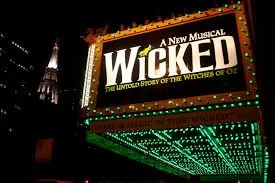
Wicked
Spoiler warnings for a 22-year-old musical and 30-year-old book
In brief, Wicked follows the journey of a young green-skinned witch, Elphaba, who is isolated and marginalised by the society of Oz because of her appearance. She later befriends Galinda and travels to the Emerald City, where she discovers that the widely praised Wizard of Oz is a fraud.
The production appears to explore several underlying themes. These may include authoritarian leadership (through the Wizard’s influence over Oz), the spread of misinformation, and societal prejudice. More clearly, the musical and film address ideas of animal mistreatment, which some have even likened to historical examples of oppression, such as the persecution of Jewish people in Nazi Germany. Although these ideas are presented within a fantastical setting, being able to recognise such themes can help audiences identify links to real-world issues.
Many viewers received backlash online for not recognising these themes and instead describing the film as simply a fantasy or romance. For example, some dismissed the idea of Elphaba representing people of colour, despite her actress, Cynthia Erivo, being a Black woman. This debate has been cited by some as an example of what they call the “death of media literacy.”
Some critics argue that it is surprising when audiences overlook themes such as the manipulation of information and the persecution of minorities portrayed through the Wizard’s character.
American Eagle Jeans Advertisement
Another example often mentioned in discussions about media literacy is the release of the American Eagle jeans advertisement starring Sydney Sweeney.
In the advert, Sweeney narrates a video while wearing American Eagle jeans and uses wordplay on “genes,” referring to how “genes are passed down from parents to offspring, often determining traits like hair and eye colour.” Because of this wordplay, some viewers claimed that the advertisement could be interpreted as referencing eugenics.
Eugenics is the scientifically discredited theory that humans can be “improved” through selective breeding. Historically, eugenics has been associated with extremist ideologies, including Nazi beliefs about a so-called “master race,” often characterised by blue eyes and blonde hair - features of the actress in the advert.
As a result, lines such as “Sydney Sweeney has great jeans” and “my jeans are blue” were interpreted by some as subtle political messaging due to the homophones “jeans” and “genes.” However, online discussion following the advert’s release was divided. Some argued that it was simply a marketing strategy featuring a well-known celebrity, with no deeper political meaning. Others believed it contained more concerning implications. It is also possible that the controversy itself functioned as a marketing tactic.
Media has long been a conduit for political ideas, concepts, and social commentary. Therefore, failing to question or examine potential underlying messages can leave audiences unaware of how media may shape perspectives.
To Conclude
Whilst literacy has always been an important global issue, the easy and widespread access to social media platforms (such as TikTok and Instagram) has allowed a much wider range of opinions and interpretations to be shared publicly. On one hand, this can promote media literacy by exposing audiences to perspectives they may not have previously considered. On the other hand, it can also highlight misunderstandings or spread misleading interpretations.
Issues surrounding media literacy may also relate to education systems and how critical thinking skills are taught and developed. Some debates, such as controversies around book availability in certain regions, connect to broader discussions about access to diverse perspectives. At the same time, sources such as Statista report that global literacy rates have risen to approximately 87.36%, showing an overall trend of improvement, which will hopefully translate into increased media literacy in the relatively new world of easy access to media.
Perhaps, rather than declaring media literacy “dead,” it would be more accurate to say that it is increasingly necessary. In a fast-paced digital world filled with constant information, developing the ability to analyse, question, and interpret media thoughtfully is more important than ever.
