The 27 Club - Curse or not?
Kurt Cobain rose to fame in the early 1990s and became one of the most influential singers of his time. Born in Aberdeen, Washington, in 1967, his childhood was heavily influenced by his parents’ divorce. As a teenager, Cobain struggled with mood swings, depression, and chronic headaches, eventually being diagnosed with bipolar disorder. Despite these clear psychological challenges, music became his hobby.
On his fourteenth birthday, when given the choice between a bicycle and a used guitar, Cobain chose the guitar, which became a decision that would go on to change the future of rock music. Teaching himself to play songs by Led Zeppelin, Queen, and The Cars, he soon began writing about his own childhood trauma. Even though he was left-handed and played on a right-handed guitar, his resourcefulness reflected a lifelong sense of determination to beat the odds in the world around him. Kurt eventually dropped out of high school to form the band that would become known as Nirvana.
Nirvana released their debut album, Bleach, in 1989. Recorded on a minimal budget, its heavy, abrasive sound mirrored Cobain’s emotion and at the same time displayed his unique talent. However, around this time, Cobain began suffering from severe, unexplained stomach pain that would plague him for the rest of his life. The constant physical discomfort deepened his anxiety and depression, contributing to later drug use as a form of self-medication and his heroin addiction.
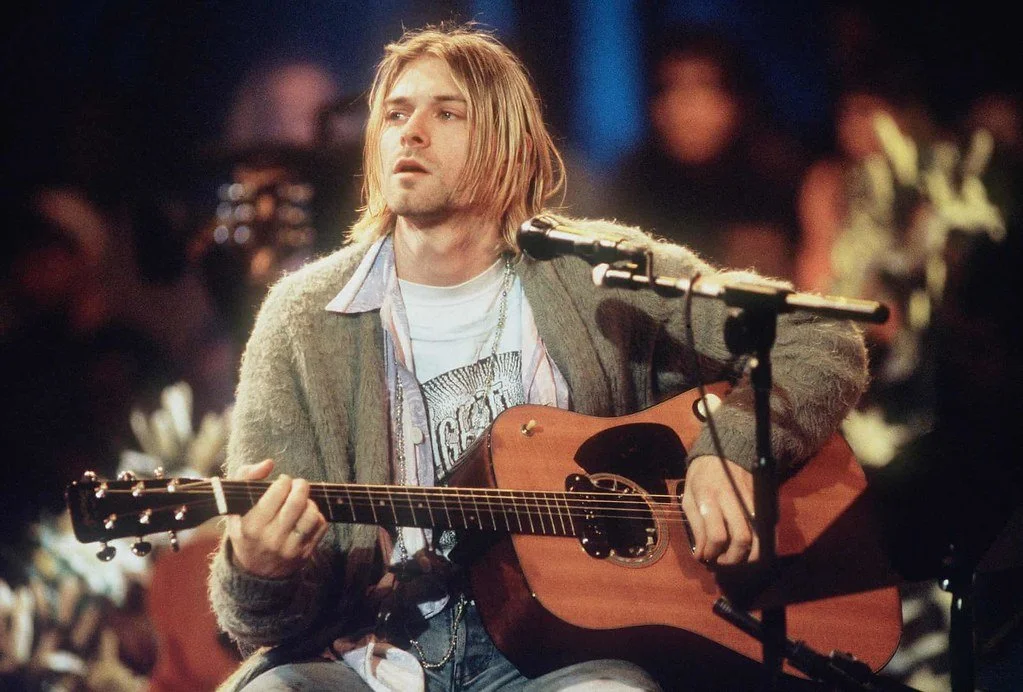
“Kurt performing on MTV Unplugged with Nirvana in
November 1993”
Everything changed when Nevermind (Nirvana’s 2nd album) was released in September 1991. Nevermind reached No. 1 on the US Billboard 200 and displaced Michael Jackson’s Dangerous from the top spot, spending hundreds of weeks on the chart. Nirvana’s sudden rise to global fame transformed Cobain into an unwitting cultural icon. Songs like “Smells Like Teen Spirit,” “Lithium,” and “Come As You Are” captured worldwide fame, but the success of Nevermind only intensified his emotional instability. Touring worsened his physical pain, and heroin increasingly became a way to escape both bodily suffering and psychological pressures. As Nevermind dominated the charts, Cobain felt increasingly misunderstood by the image the world projected onto him. On top of this, relentless media scrutiny worsened his paranoia and depression. By April 1994, the weight of untreated bipolar disorder, chronic pain, addiction, and relentless public pressure became unbearable. After failed rehabilitation attempts and growing isolation, Kurt Cobain committed suicide using a shotgun at the age of 27.
17 years later, Amy Winehouse would die similarly. Born in 1983 in North London, she grew up in a Jewish household where music was a constant presence. Jazz, soul, and blues filled her childhood, shaped especially by her father’s love of artists like Frank Sinatra. From an early age, Winehouse displayed extraordinary musical talent. She even attended several performing arts schools, but she was often disciplined or expelled for rebellious behaviour, hinting at deeper struggles with authority, stability, and self-control.
Her debut album, Frank (2003), introduced her as a sharp, soulful songwriter with an unmistakable voice. But it was Back to Black (2006) that transformed her into a global star. Its retro sound and brutally honest lyrics resonated worldwide, earning immense praise. In 2008, the album won five Grammy Awards, making Amy Winehouse the first British female artist to achieve that feat in one night.

“Amy Winehouse singing at the Eurockéennes in 2007”
However, the success of Back to Black brought an intense level of fame that quickly became overwhelming. Winehouse was suddenly one of the most recognisable artists in the world, and her every move attracted media attention. Paparazzi followed her constantly, and her personal struggles were frequently splashed across tabloids and gossip columns. This level of scrutiny made it difficult for her to maintain any sense of privacy, and her problems with addiction became increasingly public. Her performances during this period were unpredictable. At times, she delivered powerful live shows that reminded audiences why she was considered one of the most talented singers of her generation. At other moments, however, concerts were cancelled or cut short due to her deteriorating physical and mental health.
Despite concern from fans and family, the demands of touring and public appearances often continued, highlighting the pressure placed on artists who achieve sudden global fame. Winehouse’s image also became iconic during this time. Her towering beehive hairstyle, dramatic eyeliner, and tattoos made her instantly recognisable, turning her into a cultural figure beyond music alone. Yet the same media attention that celebrated her unique style often sensationalised her struggles. Photographs and headlines frequently focused on her declining health, reinforcing a cycle in which her personal difficulties became part of the public spectacle surrounding her career.
Yet, Back to Black also documented her emotional collapse, particularly her dependence on alcohol, drugs, and destructive relationships. As her fame intensified, so did her addiction. Rehabilitation attempts were inconsistent, and the pressure to perform often outweighed concern for her well-being. On July 23, 2011, Amy Winehouse died at the age of 27 from alcohol poisoning after a period of abstinence.
Before both of these talents were born, Jimi Hendrix’s death would start the mythology that would later become the 27 Club. Born in Seattle in 1942, Hendrix grew up in poverty and instability, experiencing neglect and emotional trauma throughout his childhood. Music became both escape and identity. Teaching himself guitar as a teenager, Hendrix developed a revolutionary playing style that blended blues, rock, and experimentation. By the late 1960s, he had redefined what the electric guitar could do, transforming live performances into something explosive and establishing himself as one of the best guitar players of all time.
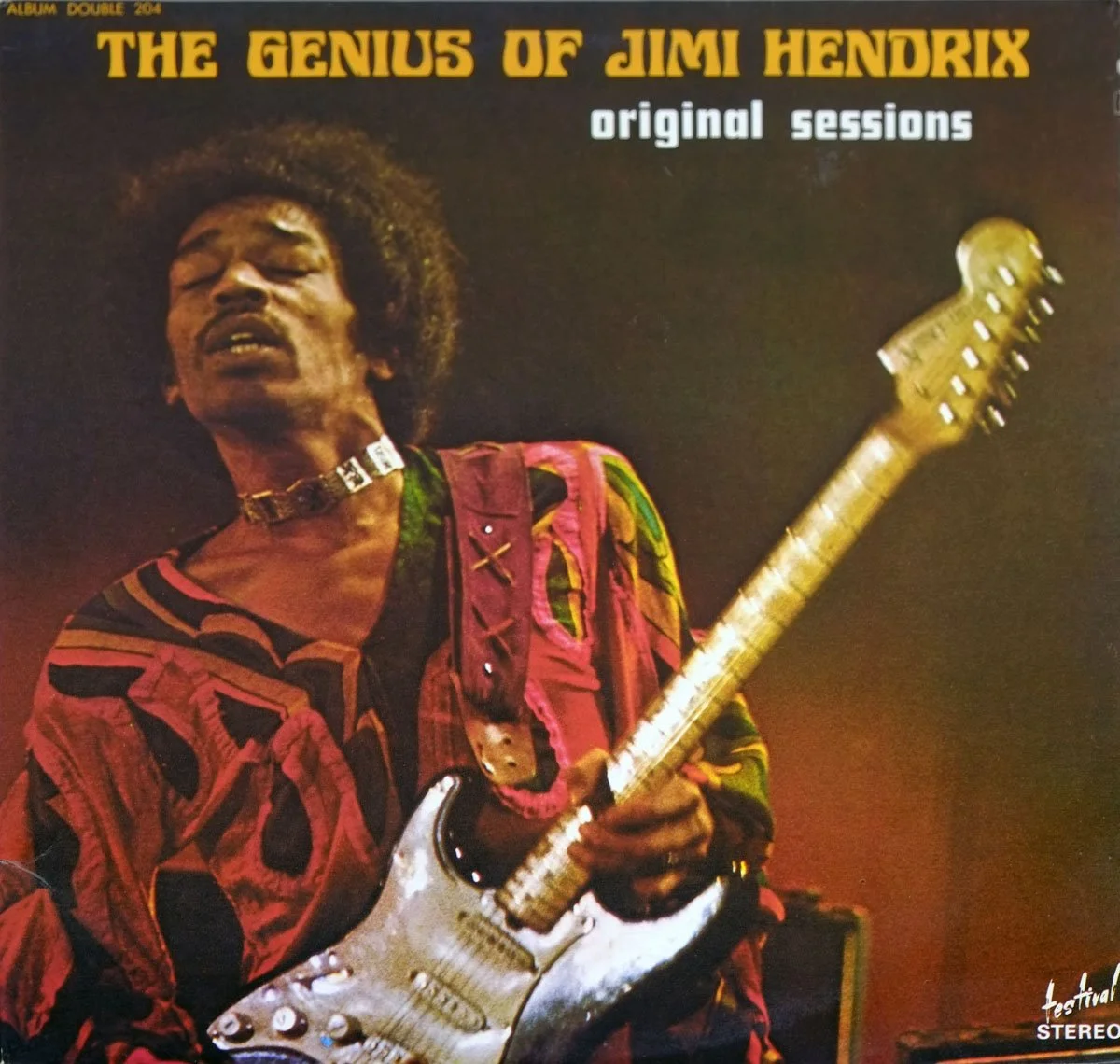
“Jimi’s best work was compiled into ‘The Genius of Jimi Hendrix’ Album
After rising to international stardom in the late 1960s, Jimi Hendrix became one of the most recognised and celebrated figures of his generation. With fame came intense public scrutiny - fans, journalists, and photographers followed his every move, creating a relentless pressure that was difficult to escape. His charisma and stage presence made him a magnet for attention, but also left little room for privacy or rest.
Hendrix’s personal life during this period was tumultuous. Relationships were often strained by the demands of constant touring, the public spotlight, and the pressures of maintaining his image. Friends and associates described him as both brilliant and sensitive, prone to bouts of exhaustion and emotional vulnerability. The whirlwind of fame, combined with a lifestyle marked by late nights, heavy partying, and experimentation with drugs and alcohol, took a toll on his health and well-being.
Despite these challenges, Hendrix remained fiercely independent and driven. He sought control over his environment and creative decisions, often clashing with managers, promoters, and others who tried to dictate his career. While his public persona radiated confidence and energy, behind the scenes, he struggled with fatigue, isolation, and the effects of constant travel and pressure.
On September 18, 1970, Hendrix died in London at the age of 27 after complications related to barbiturates and alcohol. Although his career lasted only a few years at the height of fame, his influence on rock music and guitar playing remains profound, and he is widely regarded as one of the greatest guitarists in history.
Looking across the 27 Club, a clear pattern emerges beyond mere coincidence. On top of Kurt Cobain, Amy Winehouse, Jimi Hendrix, Brian Jones, founding member of the Rolling Stones, Janis Joplin, the raw soul singer from Texas, and Jim Morrison, the frontman of The Doors, all died at the same age due to trauma, mental health struggles, and the relentless pressures of fame demanding so much from these young souls.
While the media has romanticised the age of 27 as some kind of mystical “curse,” I think the reality is far more grounded. These deaths just show the lethal combination of intense emotional problems, mental health challenges, and substance abuse. The “curse” is not mystical; it just doesn’t exist, and death is preventable when the health of these musicians isn’t overlooked.