Principality of Piddington votes to leave UK in ‘an example of democracy’ over migrant housing plans
16 September marked the day a symbolic referendum passed in Piddington, Oxfordshire. The referendum was held to ‘symbolically’ leave the UK, following plans for migrant housing to be outlined in Bicester, a nearby location.
Out of 312 votes, 285 voted to leave, 26 voted no and one ballot was spoiled.
The referendum was described at first as a ‘plucky idea’, by Parish council chair Tim McNally. Tim also likened the referendum to ‘the Battle for Britain’.
Locals’ concerns regarding the migrant housing plans stemmed from concerns of security. Firstly, Derek, an 86-year-old resident in Piddington sighted concern for ‘the children and the women’. Derek later explained to London Loves Business that he ‘would not be able to do anything to try and defend myself to be honest’.
Similarly, women from Piddington wrote to female MPs and stated ‘As fellow women, you will understand the serious risks this will expose us to’ They added that, ‘Our safety, our security and our freedoms will be under threat’ The women from Piddington have not commented on how their safety, security and freedoms would be under threat.
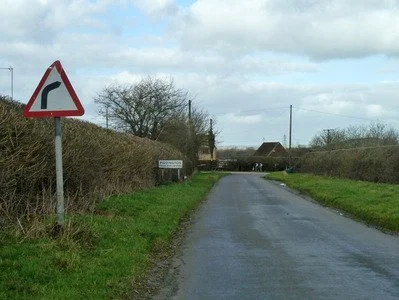
Entrance to Piddington, where locals voted to leave the United Kingdom.
South approach to Piddington on Thame Road” by Robin Webster is licensed under CC BY-SA 2.0
Elsewhere, Hari Reed, a member of the Oxfordshire-based Asylum Welcome Charity, explained that the introduction of isolated asylum seekers would put greater pressure on local public services.
Lisa Nandy, Culture Secretary and Labour MP for Wigan, stated to Sky News that she ‘understands the frustration’ but emphasised to BBC Breakfast that the government ‘would not reconsider the migrant housing approval’. The ‘backlog’ as Nandy describes, relates to the high number of migrants crossing into the UK via small boats, typically across the English Channel. There were a recorded 41,472 migrants crossing into the UK by small boat in 2025 alone, as reported by the Home Office.
However, there has already been a sharp decline due to law enforcement in the number of migrants crossing into the UK by boats, around a 44% decline in figures from last year. Furthermore, fears of migrants being more likely to commit crimes has been disproven.
As highlighted by The Migrant Observatory, at the University of Oxford, migrants only account for 12.1% of the UK’s prison population. Furthermore, following the UK’s exit from the EU officially in March 2020, small boat crossings rose rapidly due to no longer being able to return migrants to the EU state they left from, as highlighted by Ed Davey, Leader of the Liberal Democrats, back in March 2026 to the BBC.
